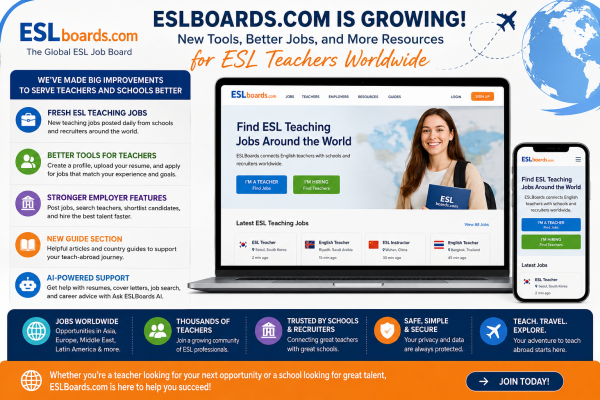
ESLBoards.com has been improving quickly, and our goal is simple: to make ESLBoards one of the most useful places online for English teachers, schools, recruiters, and anyone interested…Read more
Freelancing is one of the most liberating and lucrative paths in ESL — and one of the most misunderstood. Done well, it gives you control over your schedule,…Read more
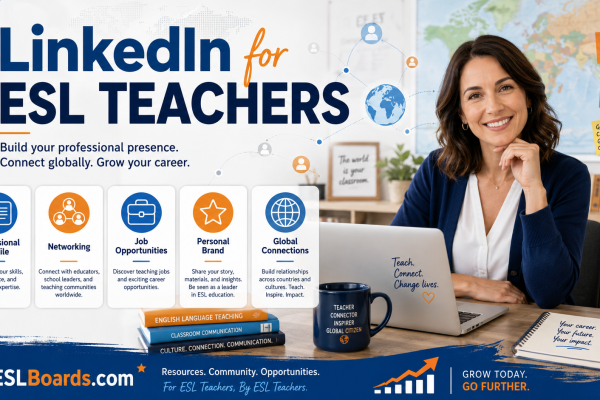
LinkedIn is the single most underused career tool in the ESL industry. Most teachers treat it as a digital resume they update once every few years — and as a…Read more
Networking has a sleazy reputation — visions of forced small talk, business cards, and transactional LinkedIn messages. But in the ESL industry, networking is…Read more
"Personal brand" sounds like corporate jargon that doesn't belong in teaching. But in the ESL industry — where reputation travels fast, students choose tutors…Read more
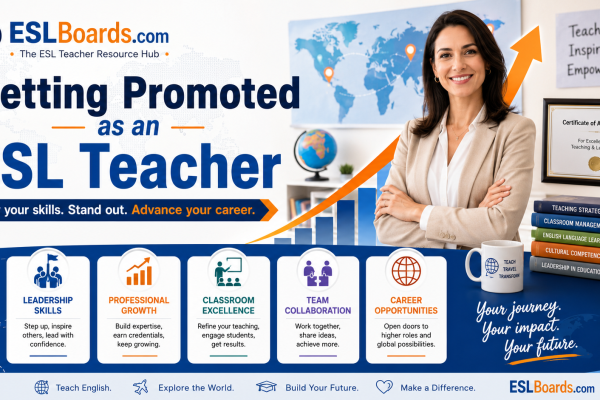
Promotion in the ESL industry doesn't look like promotion in a traditional corporate career. There's rarely a tidy annual review cycle, a clear org chart, or…Read more
One of the biggest frustrations in the ESL industry is how quickly salaries plateau. You start at a language center, you work hard for a year or two, and the…Read more
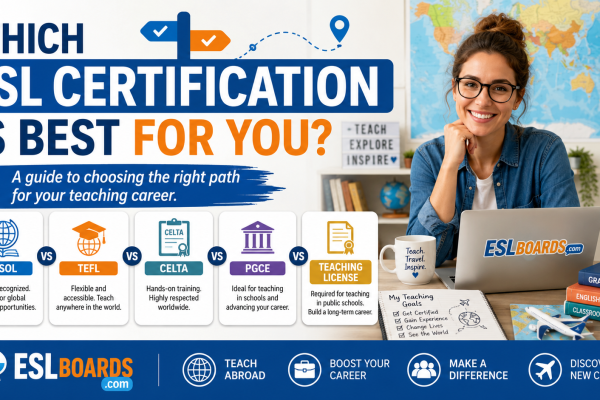
"Which ESL certification should I get?" is the single most common question aspiring English teachers ask — and the most frustrating to answer, because the…Read more
The PGCE (Postgraduate Certificate in Education) is a UK-recognized teaching qualification that qualifies you to teach in state schools — and increasingly,…Read more
The DELTA (Diploma in Teaching English to Speakers of Other Languages) is Cambridge Assessment English's advanced, post-experience teaching qualification. If…Read more
 Bryan Whitman
July 27, 2026
5 min read
Bryan Whitman
July 27, 2026
5 min read